


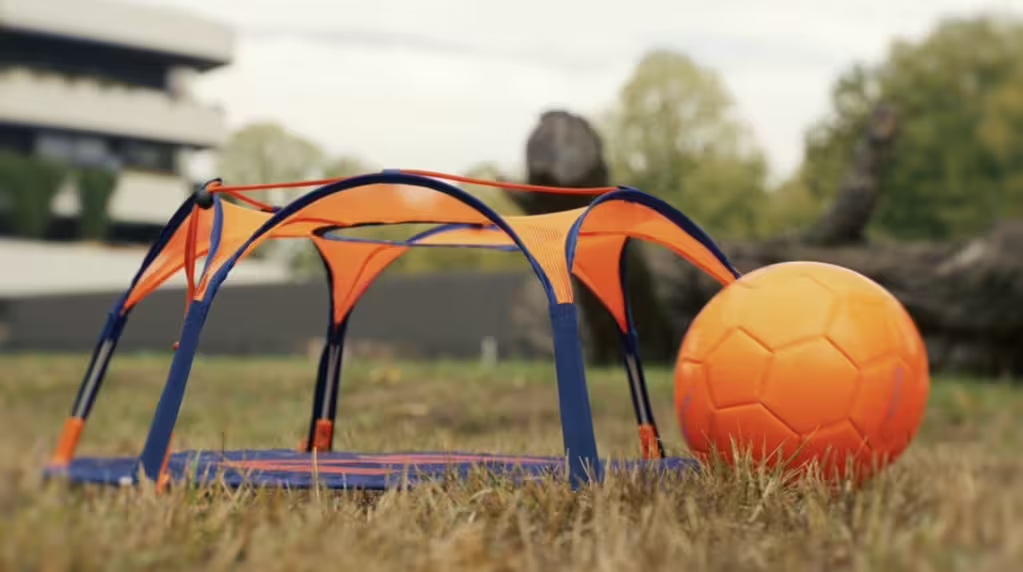
Pannaball launches today: how a student idea became a patented 360° football game
Today, Pannaball opens for pre-orders. What began as a student idea at Howest has grown through sport innovation research into a portable 360° football game, and into Stepaside, Howest’s sport innovation spin-off. The first deliveries are expected from mid-December.
Pannaball is one lightweight, foldable goal designed for play from every side and from above. It does not take a full-sized pitch: around ten square metres is enough to get started. Carry it with you, open it up and play one against one, in teams or with a larger group. A goal does not end the game; it keeps moving. Side gates are worth one point, while a goal scored through the top is worth three. Players can add their own rules, too.
A research project built around a practical challenge
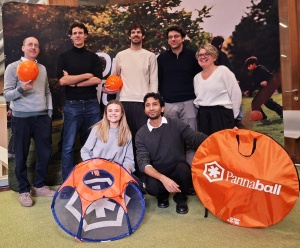
Urban sport is growing, while many people want flexible ways to be active without relying on a dedicated pitch or fixed club setting. Panna set out to explore a portable, accessible game for young people and recreational players. The Howest research project, led by Thijs Bouten and Joost Vansteenkiste, focused on developing a market-ready prototype with attention to safety, usability and durability.
From testing to market preparation
The project brought together three strands of work: research and development, intellectual-property strategy, and market study and business development. The work included mechanical and durability testing, user-safety considerations, patent research and Freedom-to-Operate analyses, as well as market validation, competitor analysis and the development of a go-to-market strategy. Methods included laboratory tests, user surveys, FMEA analyses and financial modelling.
The intended results were a technically validated prototype, an IP strategy and a substantiated business plan. This combination helped prepare the concept for its next stage beyond the research project.
Protecting the idea early
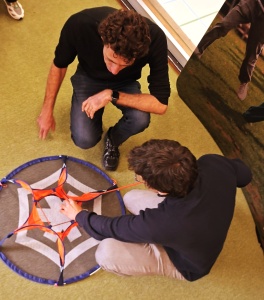
Panna was developed with the Sportinnovatiecampus Living Lab (Howest-Sport Vlaanderen) and Ghent University. A first patent family was filed with support from Winger’s patent attorneys, helping protect the goal’s innovative features and provide a basis for further development.
From student idea to spin-off
The research project has now moved into a company: Stepaside, Howest’s sport innovation spin-off. The licence agreement was finalised in July 2026. Today’s pre-order launch marks the next step in bringing Pannaball to players, schools, clubs and other groups looking for a flexible way to play.
Pre-orders open today, with delivery expected from mid-December. Discover Pannaball at pannaball.eu. Read more about the research project on the Howest project page. For project information, contact Thijs Bouten at thijs.bouten@howest.be. For Victoris partnership and collaboration inquiries, contact victoris@ugent.be.